News
2025 Winners for the Ignis Award in memory of Carsten Spohn: Carlotta Pagani and Johan Böni
2024 Winners of the first edition of the Carsten Spohn Award: Ragnhild Elise Dirdal (traineeship at AVR, Netherlands) and Wouter Meynendonckx (traineeship at Hera Bologna, Italy)
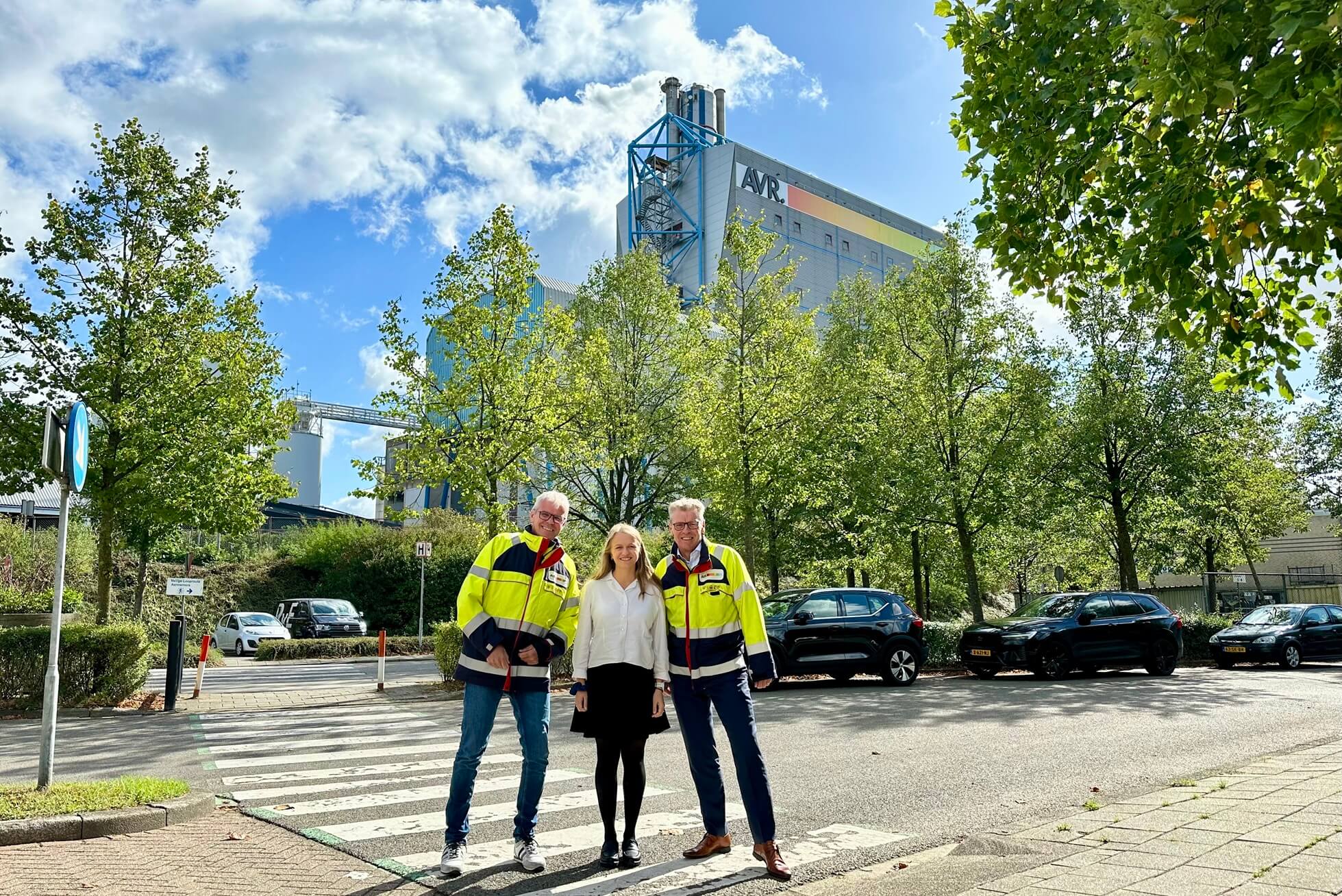
In September 2024 Ragnhild Elise Dirdal received the Carsten Spohn Award for her research on selective copper recovery from bottom ash – a key step toward circular raw material use. As part of the Award Ragnhild was invited to do an internship in one of volunteering CEWEP Member plants across Europe.
Ragnhild chose AVR for her traineeship, attracted by their pioneering work in bottom ash applications, projects like CEMPr in Duiven, and their CO₂ capture expertise. Guided by colleagues across Rozenburg and Duiven sites, she explored their incineration processes and took the opportunity to visit their partners Heros, BluePhoenix, and Mineralz, gaining valuable insight into metal recovery and material reuse.
Her visit not only deepened her knowledge but also sparked meaningful knowledge exchange – a great example of how young researchers and industry can drive innovation together.
Please scroll below for Ragnhild’s own recount of her experience.
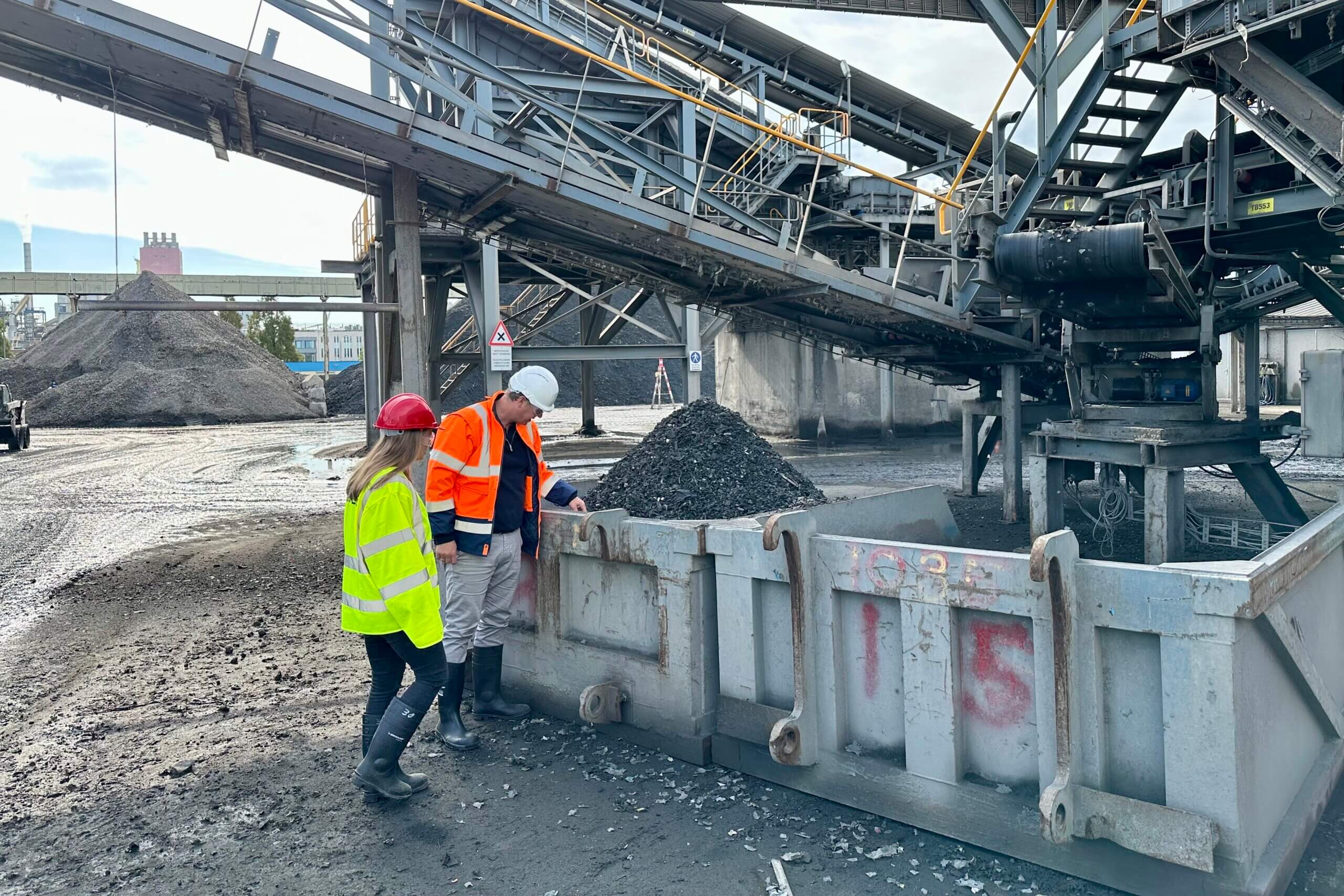
“Knowing that the Netherlands had come a long way in the waste management field, I decided that choosing AVR would be a good fit to learn as much as possible.
After spending a week with AVR and its partners, I’m really satisfied with my choice. I was impressed with the advanced processes and innovative projects and also learning about their plans to improve even further. Apart from all the advanced systems related to the combustion process, such as the carbon capture plant at AVR Duiven, what impressed me the most was the close collaboration between AVR and its partners. By visiting both AVR and their partners, it became clear to me how intertwined their processes are. Moreover, it was clear that everyone was on the same team, and knew each other well. For me it almost seemed like one big company working together.
This industry is not standing still; there are always new developments happening and innovative ideas being tested. As a researcher, I think it’s very motivating to learn how encouraging the waste management industry is to new findings, which I think is key to ensure continuous improvement.
Thanks AVR!”

In September 2024 Wouter Meynendonckx received the Carsten Spohn Award for his research focused on unravelling the complex interdependencies in Waste-to-Energy plants between process variables in the central combustion control system and the chemical compositions of gasses and ashes. As part of the Award Wouter was invited to do an internship in one of volunteering CEWEP Member plants across Europe.
Please scroll below for Wouter’s own recount of his experience.
“After previously visiting the HERA Bologna Waste-to-Energy installation during a PREWIN network conference, I found it worthwhile to return for a more in-depth look at the process.
Marco Barbieri, process engineer, welcomed me in true Italian style—with espresso and pastry. The day began with a guided tour of the facility, from the waste bunker to the combustion furnace and the flue gas cleaning system. It’s always impressive to witness the scale of the waste bunker and observe how the crane operators manage incoming waste through homogenisation and mixing.
As my research focuses on optimising combustion control with respect to the release of HCl and SO₂ from waste, I was particularly interested in learning about HERA Bologna’s standard combustion settings and how they manage waste combustion on the grate. The visit concluded with a look at their flue gas cleaning system, which remains a highlight due to its complexity and effectiveness.
 Marco and I exchanged thoughts on my research article and discussed potential benefits for HERA Bologna. Following the visit, some data was shared, and a preliminary analysis of their combustion control in relation to HCl and SO₂ emissions from the waste layer is expected in the near future. I hadn’t anticipated this opportunity, but it’s a great example of how the industry is open to innovation and actively seeks out industrial research.
A big thank you to Marco and the HERA Bologna team for this insightful and enjoyable experience.”